Sleep Stages: Deep Sleep and REM Tracking
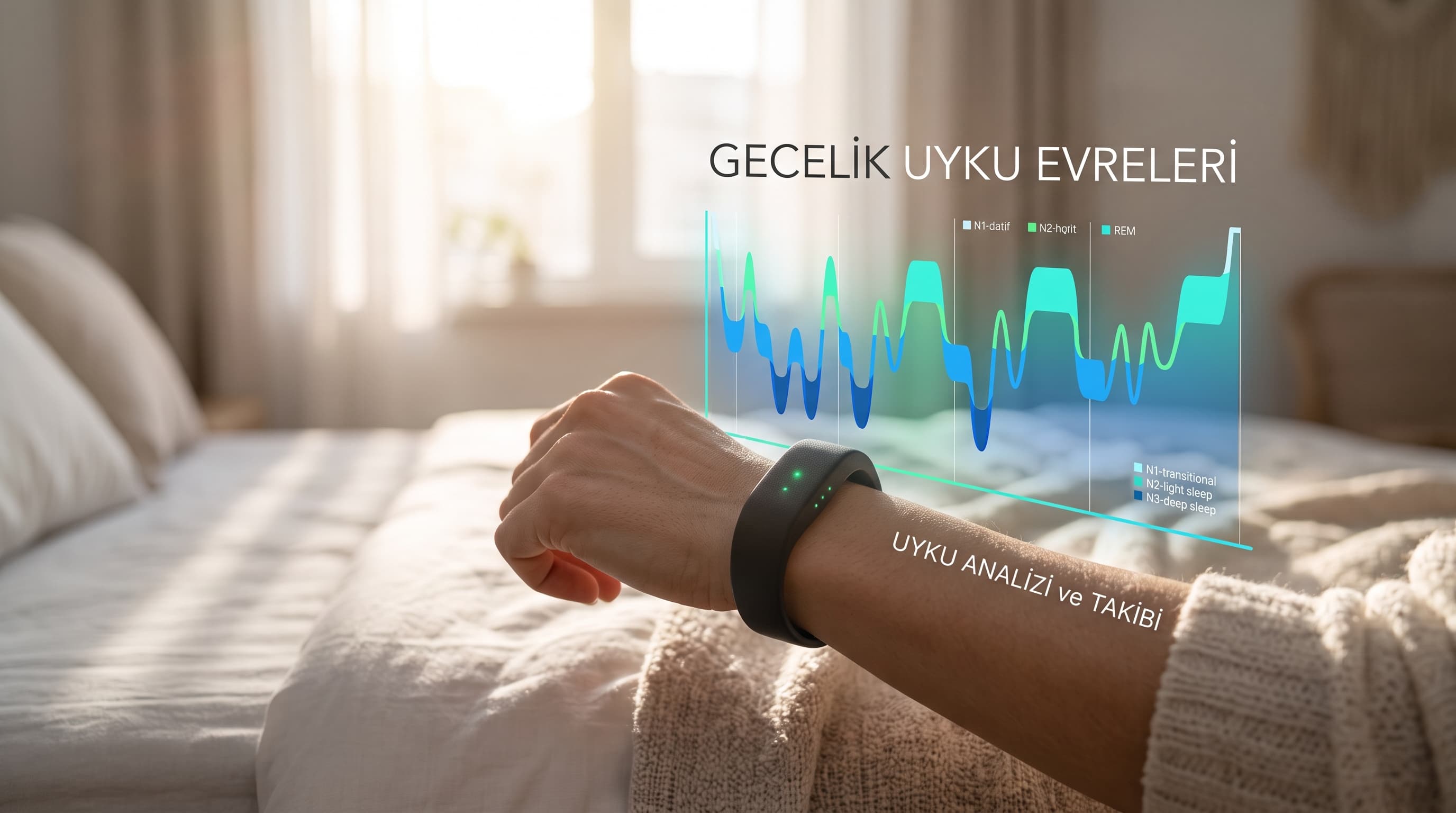
Spending seven hours in bed is not the same as seven hours of rest. Sleep stages explain the difference: through the night your brain moves through four very different states, each completing a different job. This guide covers what the stages are, how a healthy night is distributed, and how the band on your wrist produces that data.
What are the sleep stages?
Sleep splits into two groups — non-REM (NREM) and REM — across four stages in total. A healthy night cycles through them in roughly 90-minute rounds, and an adult usually completes four to six cycles.
| Stage | What happens | Why it matters |
|---|---|---|
| N1 — transition | Wake-to-sleep transition, muscles relax, a few minutes | The doorway into sleep; frequent interruptions here leave fatigue behind |
| N2 — light sleep | Heart rate and body temperature drop; the longest portion of the night | Consolidating learned information and conserving energy |
| N3 — deep sleep | Slow brain waves, the hardest stage to wake from | Tissue repair, immune function and physical recovery |
| REM | Rapid eye movement, active brain, muscles temporarily offline | Emotional processing, memory consolidation, dreaming |
How a night unfolds
The stages are not spread evenly, and this detail matters a great deal:
- Deep sleep (N3) is concentrated in the first half of the night. So if you go to bed late and wake at your usual time, deep sleep is what you lose most.
- REM lengthens towards morning. Moving your alarm two hours earlier means cutting most of your REM.
Even with identical total sleep, shifting your bedtime changes the stage distribution. That is why consistency matters more than duration.
How much deep sleep do you need?
In adults, deep sleep typically occupies a modest slice of total sleep and declines with age — a normal process. Rather than chasing a single target percentage, ask two questions: is your deep-sleep share falling relative to your own average, and do you feel rested during the day?
On duration, the common recommendation for adults is 7-9 hours a night. Nights below that range hit REM first, then cognitive performance.
How does a wearable measure sleep?
In a lab, sleep stages are determined by polysomnography: brain waves (EEG), eye movement and muscle activity recorded simultaneously. A band measures none of these. Instead it combines three indirect signals:
- Movement — an accelerometer tracks how much you shift.
- Heart rate and its trend — heart rate changes noticeably between stages.
- HRV — parasympathetic activity rises in deep sleep. We covered this in detail in what is HRV.
A stage estimate is produced from those three signals. To be honest about it: bands are very good at catching when you fell asleep and woke up; the stage breakdown is an estimate. So the right way to use the percentages is to watch how they move over weeks, not their absolute value on any single night.
Seven habits that actually improve your sleep score
- Fix your wake time. Weekends included. Your body clock is set more by when you get up than when you lie down.
- Get morning daylight. Ten to fifteen minutes outside within an hour of waking pulls evening sleepiness earlier.
- Cut caffeine after midday. Its effect lasts for hours; an afternoon coffee can reduce deep sleep without you noticing.
- Skip alcohol before bed. It makes falling asleep easier but suppresses REM in the second half of the night and lowers HRV.
- Keep the room cool and dark. A falling body temperature is the physiological trigger for sleep onset.
- Move your last heavy meal three hours earlier. Digestion delays the metabolic slow-down deep sleep needs.
- Get out of bed if you are awake. Turning over for more than 20 minutes? Get up and do something calm in dim light; not associating the bed with wakefulness matters.
Frequently asked questions
How accurate is wearable sleep tracking?
Bands are quite accurate at capturing sleep and wake times. The stage breakdown is an estimate derived from heart rate, HRV and movement, and it will not match a lab recording night for night. Used correctly, you read the weekly trend rather than a single night.
Will wearing a band disturb my sleep?
Most people adjust within a few nights. If it feels uncomfortable, loosen the strap by one hole and move the band slightly above the wrist bone. Choosing a band whose screen turns off at night and whose vibration can be disabled also helps.
Do daytime naps lower my sleep score?
A short nap of 20 to 30 minutes is usually fine. Longer naps, or ones close to the evening, reduce the depth of night-time sleep; bands show this as a drop in the following night's deep-sleep share.
Do I have to go to bed at exactly the same time?
Not exactly, but consistency helps. Half an hour of night-to-night variation is normal; shifts of two or three hours disrupt stage distribution and cut deep sleep in particular. Keeping your wake time fixed is the most practical fix.
Conclusion
Sleep stages explain why "how many hours did I sleep" is an incomplete question. Deep sleep gathers at the start of the night and REM at the end, which is why consistency in your bed and wake times can matter more than total duration.
Next Health Band records sleep duration, stage distribution and overnight HRV together; the mobile app shows the weekly trend on a single screen. For corporate health programmes, get in touch.
Sources and further reading
- Sleep Foundation — Stages of sleep
- World Health Organization — Physical activity fact sheet
This content is for information only. Next Health Band is not a medical device; if you suspect a sleep disorder, consult a doctor.