How to Choose a Health Band: 7 Criteria
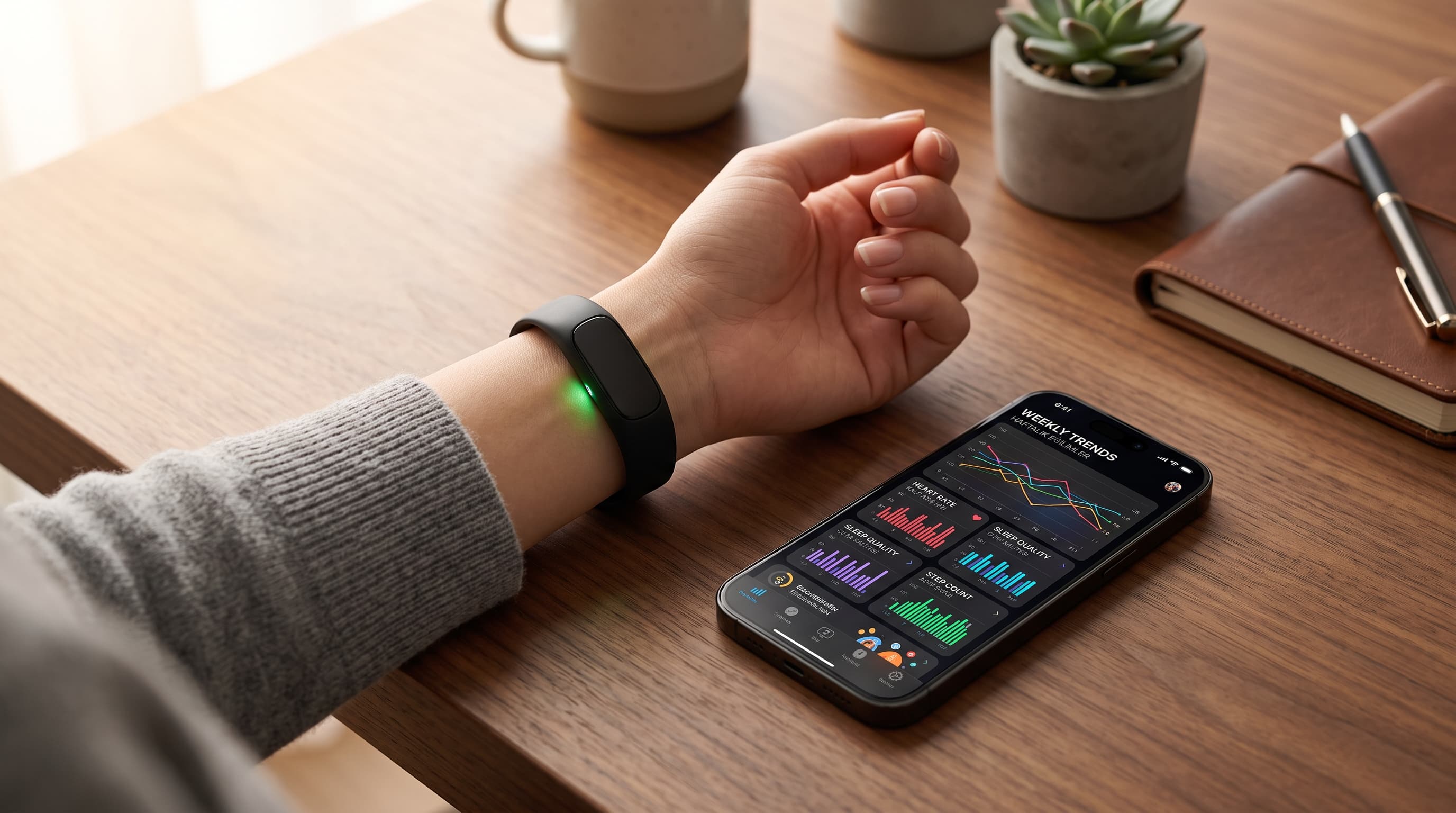
The most common mistake when choosing a health band is judging it by the length of the feature list. What actually matters in daily use is not the number of metrics but whether the device collects data without gaps and turns it into something meaningful. This guide covers the seven criteria that genuinely affect the decision, plus a final checklist.
What should you judge it on?
| Criterion | Why it matters | What to look for |
|---|---|---|
| Battery life | Every night on the charger is lost sleep data | Days under real usage conditions |
| Sensor set | What cannot be measured cannot be tracked | Heart rate, HRV, SpO2, skin temperature, accelerometer |
| Water resistance | Needing to remove it means a data gap | IP rating and the stated depth |
| App quality | Data only helps once it is interpreted | Trend charts, local language support, export |
| Data ownership | Health data is sensitive data | Where it is stored, your right to delete |
| Update support | Algorithms improve through software | OTA update support and track record |
| Comfort | An uncomfortable band ends up in a drawer | Weight, strap material, night-time wear |
Why battery life is the most critical criterion
The value of health tracking lies in continuity. The most meaningful data — sleep, HRV, resting heart rate — is collected at night. A device that needs daily charging is in practice either removed overnight or creates a gap during the day.
With a band that needs daily charging you lose at least two or three of every seven nights. That means half of your sleep trend is never recorded at all.
So the question "how many days does it last" has to be asked against how you will use it: with continuous heart rate on, overnight tracking and notifications enabled, real-world life falls below the headline figure. Next Health Band's 30-day battery was designed for exactly this scenario — charge monthly, collect data uninterrupted the rest of the time.
Sensors and what they can actually measure
Expectation management matters here. A wrist band's optical sensor does these things well:
- Heart rate and resting heart rate trends
- A recovery indicator via HRV — detail here
- Sleep and wake times, with a coarse stage breakdown
- Steps, movement and active minutes
By contrast, no wrist band replaces a medical measurement device. For topics like blood glucose, blood pressure and arrhythmia, what bands produce is not a measurement but a risk or trend estimate; diagnosis requires calibrated medical devices and clinical assessment. If a product presents this as a "measurement", treat that as a warning sign.
App and data ownership
What determines whether you are still wearing the band three months later is the app, not the hardware. Check these three:
- Can it show trends? Everyone has a daily number; the value is in 30- and 90-day comparison.
- Can you export your data? You do not want to lose your history when you change devices.
- Where is the data stored and can it be deleted? Health data is sensitive personal data; storage location and deletion rights should be clear.
Pre-purchase checklist
- How many days does the battery last in my real usage pattern?
- What is the IP rating and stated depth? (what does IP68 mean)
- Is it comfortable to sleep in, does the screen turn off automatically?
- Does the app support my language and show 90-day trends?
- Does it receive OTA updates?
- Where is my data stored and how are deletion requests handled?
- Is the strap replaceable, are spares available?
- For corporate use, is there fleet management and reporting?
Frequently asked questions
Should I buy a smartwatch or a health band?
A watch if notifications, apps and screen experience come first; a band if uninterrupted health tracking does. Bands are lighter, last far longer per charge and are better suited to overnight wear. With watches, daily charging is usually unavoidable.
Is a cheap band good enough?
For steps and general movement tracking, usually yes. The difference shows up in the app: trend analysis, data export, update support and localised content. Hardware may be similar, but the layer that makes data meaningful differs.
How secure is health band data?
That depends entirely on the manufacturer. Which country the data is stored in, whether it is shared with third parties, and how deletion requests are handled should all be asked before purchase. Health data counts as sensitive personal data under data protection law.
Do I have to wear it 24/7?
Not required, but data quality depends directly on it. Wearing it at night matters most: HRV, resting heart rate and sleep data are only collected while you sleep. Brief removals during the day will not disturb the trend.
Conclusion
If the choice had to be reduced to one sentence: pick the band you take off least, not the one with the most features. When battery life, water resistance and comfort come together, data flows without gaps — and uninterrupted data is the precondition for trend analysis.
Next Health Band was built on those three criteria: a 30-day battery, IP68 / 10 m water resistance, and a lightweight body designed to be worn overnight. The AI-assisted panel shows daily values against your personal range. For corporate health programmes, get in touch.
This content is for information only. Next Health Band is not a medical device; consult your doctor for diagnosis and treatment decisions.