How Wrist Heart Rate Works: PPG Explained
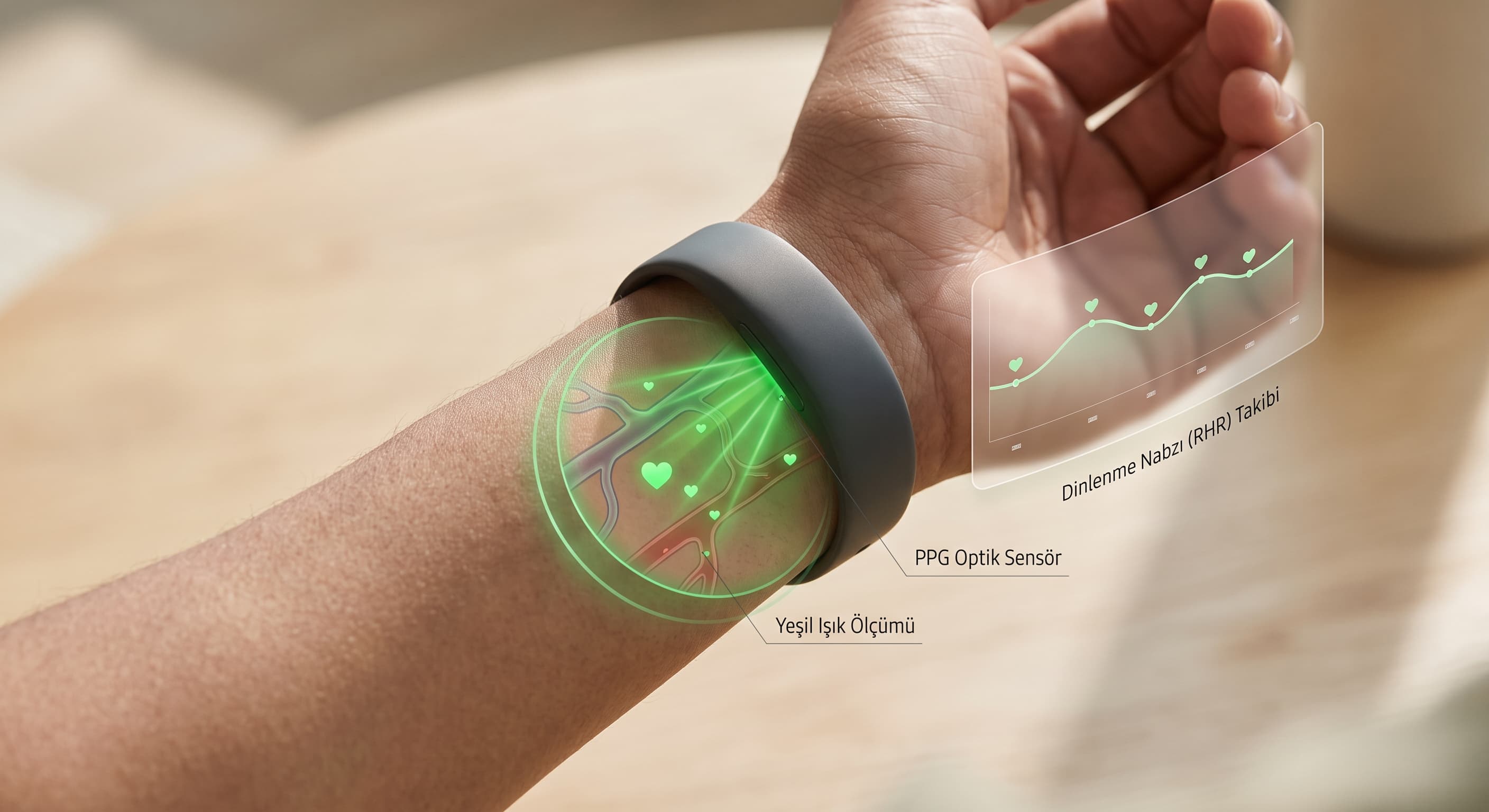
Look under the band on your wrist and you will see blinking green lights. That is where wrist heart rate measurement begins: that light reads the change in blood volume beneath your skin and counts your heartbeats. This guide covers how the PPG sensor works, how it differs from ECG, and the six factors that degrade your data.
What is PPG and how does it work?
PPG (photoplethysmography) sends light into the skin and measures how much bounces back. Each time your heart beats, the volume of blood passing through the vessels briefly rises; because blood absorbs light, less light returns to the sensor at that moment. Counting that rise-and-fall pattern gives your heart rate.
Green light is used for a practical reason: haemoglobin absorbs green wavelengths strongly, which makes the signal easier to separate from noise. Readings contain less noise at rest and more during movement.
PPG versus ECG
| PPG (optical, wrist) | ECG (electrical) | |
|---|---|---|
| What it measures | Change in blood volume | The heart's electrical activity |
| Heart rate accuracy | High at rest, falls with intense movement | The reference standard |
| Rhythm analysis | Limited | Detailed |
| Continuous use | 24/7, unobtrusive | Short sessions, electrodes required |
| Purpose | Trend tracking, recovery, sleep | Clinical diagnosis |
In short: PPG's strength is not accuracy but continuity. An ECG gives you a very sharp photograph of five minutes; a band gives you six months of trend. They are not competitors — they do different jobs.
Six factors that affect accuracy
- Strap tightness. The single biggest factor. A loose band lets ambient light between sensor and skin, corrupting the signal.
- Movement. Weight training, gripping handlebars and wrist-heavy sports like tennis are the hardest cases. Running and walking produce a cleaner signal.
- Cold. In cold weather surface vessels constrict, blood flow drops and the signal weakens. Inconsistency in the first minutes outdoors in winter is normal.
- Barriers to skin contact. Cream on the sensor window, sweat residue, dust or grime under the strap all weaken the signal.
- Tattoos and skin characteristics. Dense ink absorbs light, so a tattooed area of the wrist can interfere with readings. Dense hair also creates a contact gap.
- Where you wear it. Directly over the wrist bone is both mobile and bony — not ideal for measurement.
Five rules for reliable readings
- Wear it a finger or two above the wrist. Not on the bone, slightly up the forearm from it.
- Tighten until it contacts the skin. It should not slide when pushed, but should not leave marks.
- Tighten one more hole for training. Loosen it again afterwards; wearing it tight all day irritates the skin.
- Wipe the sensor window weekly. A damp soft cloth is enough; avoid abrasive cleaners.
- Wait to warm up in the cold. Do not read too much into the first minutes after going outside.
What resting heart rate tells you
Resting heart rate (RHR) is the most stable and most interpretable figure a band produces. Because it is measured during sleep, motion noise is minimal. It generally falls as fitness improves, while illness, alcohol, insufficient sleep and stress raise it temporarily.
If your resting heart rate sits 5-7 beats above your personal average for several days, your body is dealing with something. Read alongside your HRV data, the picture gets clearer.
Frequently asked questions
How accurate is wrist heart rate measurement?
At rest and during low-intensity activity, optical measurement comes close to reference methods. Deviation grows during intense interval training and wrist-heavy sports. A chest strap is more consistent in those scenarios.
Why does my heart rate seem to lag during training?
Optical measurement smooths the signal to reduce noise, which introduces a small delay during rapid changes. A one- or two-second lag on sudden intensity jumps is normal; average heart rate and recovery data are unaffected.
Will it work over a tattoo?
Dark, dense ink absorbs light, so the signal may weaken or fail entirely. The fix is simple: wear the band on an untattooed area, or the other wrist if needed. Keep using the same spot for consistency.
Why is my heart rate so much lower at night?
During sleep the parasympathetic nervous system becomes dominant and heart rate naturally falls, reaching its lowest values in deep sleep. This is expected; there is more detail in our sleep stages article.
Conclusion
Wrist heart rate measurement is a simple but noise-prone method that reads blood-volume change with light. Its accuracy depends as much on how you wear it as on sensor quality. Worn in the right spot at the right tightness, a band produces months of meaningful trend data without a clinic visit.
Next Health Band measures heart rate and HRV continuously through the day, and the app shows the weekly trend in your resting heart rate. Get in touch.
Sources and further reading
- American Heart Association — Target heart rate zones
This content is for information only. Next Health Band is not a medical device; consult your doctor about any heart rhythm concerns.